


Nothing beats the excitement of watching your carefully crafted model rocket soar into the sky. But what happens when your rocket veers off course, tumbles through the air, or crashes before reaching its peak?
Often, these frustrating scenarios stem from stability issues that can transform an exciting launch into a disappointing experience. To avoid issues during your launch, you need to understand the various factors that can make a model rocket unstable.
Center of Gravity and Center of Pressure Imbalance
The relationship between your rocket’s center of gravity (CG) and center of pressure (CP) is the foundation of a stable flight. Your rocket’s center of gravity represents the point where all its weight balances, while the center of pressure indicates where aerodynamic forces act most strongly.
For stable flight, your rocket’s center of gravity must be ahead of its center of pressure. This allows the rocket to fly nose-first. This is similar to how a dart stays straight; its weight at the front and fins at the rear provide stability.
If the center of pressure moves ahead of the center of gravity, the rocket becomes unstable. As aerodynamic forces push the nose sideways rather than forward, the rocket may tumble, flip, or even fly erratically.
Use a swing test to check the balance. Tie a string around your rocket and find the point where it hangs horizontally, using that as your center of gravity. Ideally, it should be about one body diameter ahead of the center of pressure, which is usually just in front of the fins.
Inadequate Fin Size and Placement
Your rocket’s fins are its primary stabilization system, and their size, shape, and positioning directly affect flight stability. Fins that are too small can’t generate enough stabilizing force to counteract disturbances during flight, leaving your rocket vulnerable to wind gusts and minor imperfections in thrust. On the other hand, fins that are too large can create excessive drag, reducing the rocket’s overall performance and efficiency.
Fin positioning also matters. Fins that are too close to the rocket’s center lack the leverage needed for effective stabilization. Remember, you need an adequate surface area positioned far from the center for proper control.
Even small angular errors can create uneven drag forces and alignment issues, causing the rocket to spiral or veer off course. All fins must align perfectly parallel to the centerline and be evenly spaced around the body tube.
Lastly, consider the fin’s construction and materials. Flimsy fins that bend or flutter during flight disrupt stabilization. Instead, choose sturdy materials like balsa wood or plastic. For consistent performance, securely attach the fins to the body tube.
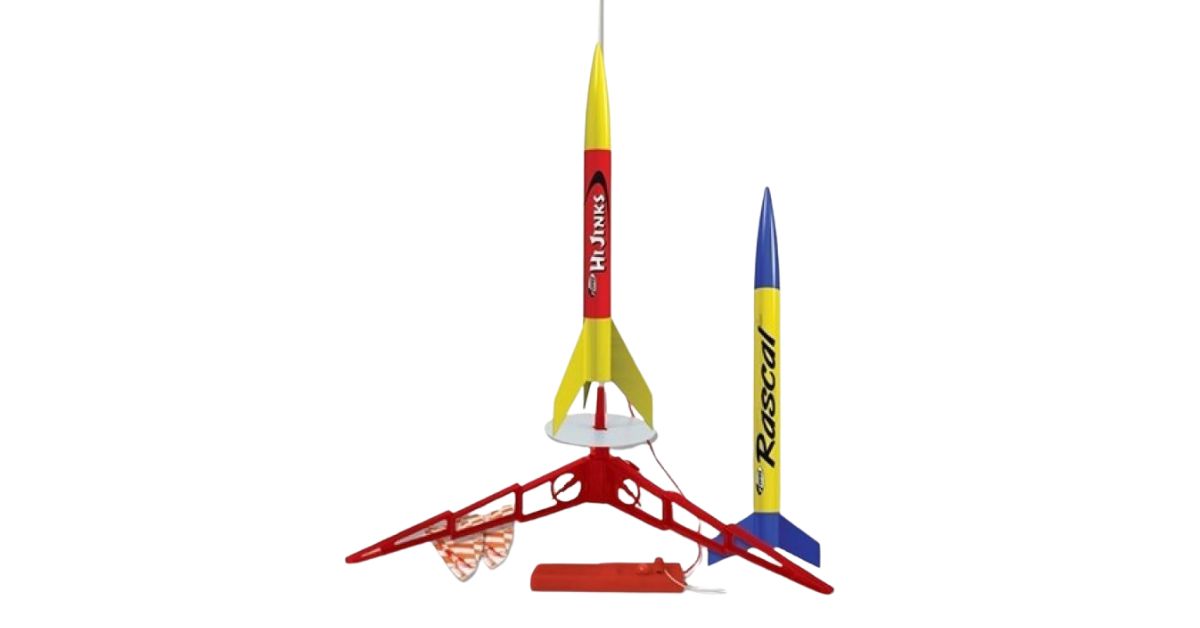
Body Tube Damage and Imperfections
Your rocket’s body tube might seem like a passive component, but damage or imperfections can hamper stability. Dents, creases, or warping in the body tube disrupt smooth airflow and create asymmetric drag forces that push your rocket off course.
Manufacturing variations in body tubes can cause flight instabilities, and tubes that aren’t perfectly round or straight introduce aerodynamic issues. Always inspect body tubes carefully for roundness, straightness, and smooth surfaces.
Wadding, parachutes, harnesses, or other recovery systems that shift during flight can dynamically alter the center of gravity, which could potentially cause instability during flight transitions. Check their weight distribution before flight.
Engine Mount Issues
Your rocket’s engine mount is its thrust vector control system, so problems here directly translate to flight instability. A loose engine mount allows the motor to shift during thrust, changing the direction of applied force and sending your rocket off course.
When the motor isn’t aligned with the rocket’s centerline, it applies thrust at an angle, creating a turning moment that grows stronger as thrust increases. Typically, this leads to dramatic deviations in flight path or a complete loss of control.
Structural instability can also cause problems. Weak or flexible engine mounts allow the motor to vibrate or oscillate during burn, causing dynamic instability. This can make the rocket shake or even break apart during powered flight.
Model rocket kits with launch pads often include well-designed engine mounts that are correctly sized and feature retention systems to prevent motor movement during flight. They’re worth using to avoid issues.
After all, improperly secured motors can shift during flight, altering the rocket’s center of gravity and potentially affecting recovery system deployment. Always use reliable retention methods, such as friction fits, clips, or threaded retainers.
Nose Cone Problems
Your rocket’s nose cone shapes the airflow around the entire vehicle and plays a key role in maintaining stable flight. A loose nose cone that shifts during flight alters the rocket’s center of gravity and can create aerodynamic disturbances that destabilize the vehicle.
The nose cone’s weight also affects rocket stability. A cone that’s too light won’t provide enough forward weight bias, while one that’s too heavy can create instability by overcompensating.
Imperfections like scratches, dents, or a rough surface can also increase drag and cause asymmetric airflow. During flight, this sometimes leads to turbulence and unwanted side forces.
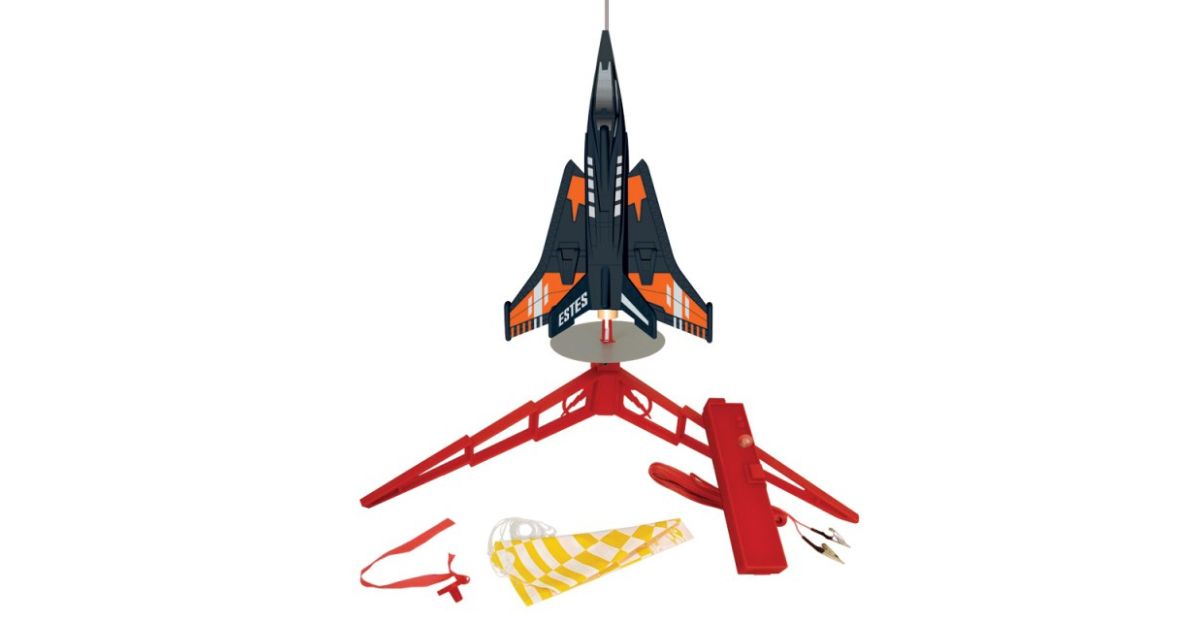
Weight Distribution Irregularities
Proper weight distribution throughout your rocket directly influences flight stability, and even small irregularities can create problems. Components that shift during flight dynamically alter the center of gravity, potentially causing your rocket to become unstable at critical flight passes.
To prevent movement during launch acceleration and coasting flight, you must properly secure batteries, electronics, and recovery systems. Loose items can destabilize an otherwise well-designed rocket.
Uneven weight distribution creates a rolling moment, causing the rocket to spin along its axis. While some spin improves stability, excessive rolling can hinder the deployment of the recovery system and make tracking difficult.
The placement of weight along the rocket’s length affects aerodynamic stability. If the weight is too far forward, it may cause over-stability and excessive weathercocking in crosswinds. Conversely, weight too far aft reduces stability.
Building Your Next Stable Flight
Understanding these factors that can make a model rocket unstable transforms you from a passive observer to an active problem-solver in your rocketry journey. Each factor is an opportunity to improve your rocket’s performance and reliability through careful attention to design and construction details.
Ready to put your knowledge into action? Visit AC Supply to find everything you need to make your next launch your best one yet!