


Building a model rocket is exciting, but if you want it to soar straight and true, you need the right fins. Rocket fins aren't just decorative; they're essential for stability and control during flight. Regardless of your experience with rockets, it’s never too late to learn everything you need to know about rocket fin design and placement. This knowledge will help you achieve better, safer flights.
We'll walk you through the basics of rocket fins, from their purpose and types to materials and mounting techniques. By the end, you'll know exactly how to choose and install fins that suit your rocket's design and performance goals.
Why Do Rockets Need Fins?
Fins provide aerodynamic stability. When a rocket launches, it needs to fly straight up without tumbling or veering off course. Fins accomplish this by keeping the rocket's center of pressure (CP) behind its center of gravity (CG). This configuration ensures that any wobble or tilt is automatically corrected by the airflow over the fins, much like feathers on an arrow.
Without fins, even a perfectly built rocket would struggle to maintain a stable trajectory. The larger the rocket or the more powerful the motor, the more critical fin design becomes.
Types of Rocket Fins
There are several common fin shapes, each with its own advantages:
- Trapezoidal fins: The most popular choice for model rockets. They offer a great balance between stability and drag, making them ideal for beginners and general-purpose rockets.
- Elliptical fins: These have a rounded, streamlined shape that reduces drag and looks sleek. They're often used in high-performance rockets where speed matters.
- Delta fins: Triangular fins that are simple to cut and attach. They're stable and work well on smaller rockets or those with lower speeds.
Choosing the right shape depends on your rocket's size, weight, motor power, and intended use. For most beginner projects, trapezoidal or delta fins are the most reliable and easy to work with.
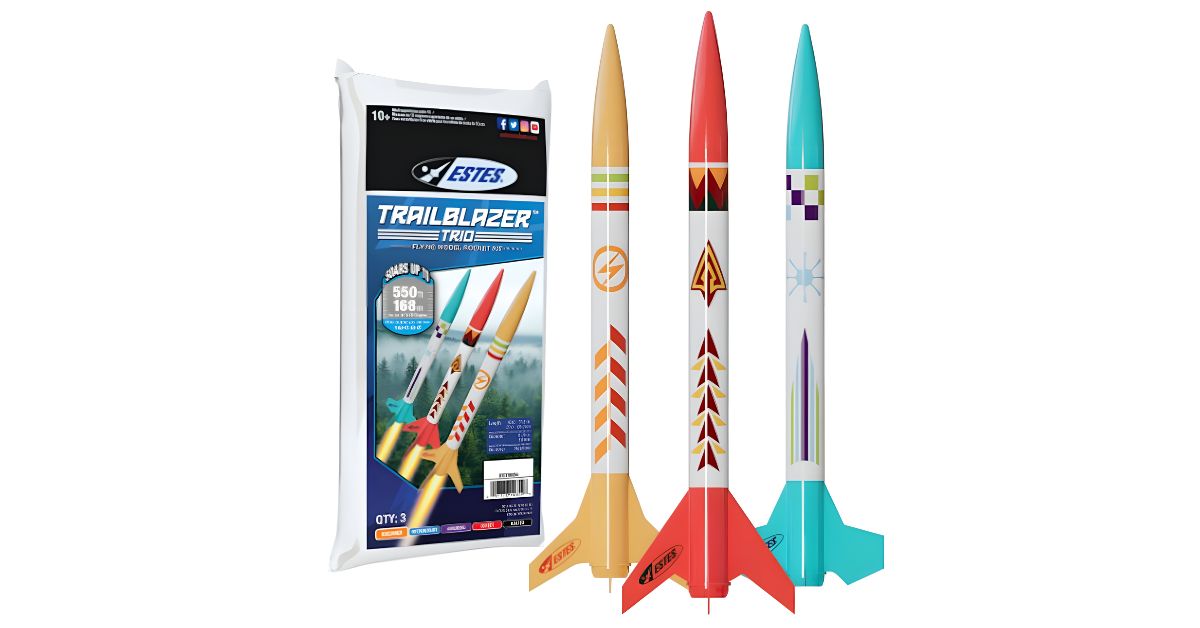
Materials: What Should Your Fins Be Made Of?
Fins use a variety of materials, each with trade-offs in weight, strength, and ease of use.
- Balsa wood: Lightweight and easy to cut, balsa is a classic choice for low- to mid-power rockets. It's affordable and beginner-friendly, though it can be fragile on hard landings.
- Basswood or plywood: Stronger than balsa, these woods are better for mid-power rockets that need more durability. They're slightly heavier but hold up well to repeated launches.
- Plastic: Some kits include pre-molded plastic fins. They're durable and consistent, though they can be heavier and less customizable than wood.
- Fiberglass or carbon fiber: Used in high-power rocketry, these materials offer excellent strength-to-weight ratios. They're more expensive and require advanced skills to work with, but they're ideal for rockets flying at high altitudes or speeds.
- Cardstock or foam board: Great for small, lightweight rockets or quick prototypes. These materials aren't very durable but work well for learning and experimentation.
For most hobbyists, balsa or basswood fins offer the best combination of performance and ease of use.
How Many Fins Should a Rocket Have?
Most model rockets have three or four fins, though designs with more (or fewer) exist.
- Three fins: This is the most common configuration. It's lightweight, stable, and easy to align. Three fins also make it simpler to mount the rocket on a launch pad.
- Four fins: This option is slightly heavier but offers a bit more stability. Four-fin designs are popular for larger or higher-performance rockets.
- More than four: While less common, this option is used in some specialized designs. Adding more fins increases drag and weight, so it's usually not necessary unless you're experimenting with a specific concept.
For beginners, stick with three or four fins. They're proven to work well across a wide range of rocket designs.
Fin Placement and Alignment
Where and how you attach your fins makes a big difference in flight performance. Here are the key principles:
- Spacing: Fins should be evenly spaced around the rocket body. For three fins, that's 120 degrees apart; for four fins, 90 degrees. Use a fin marking guide or homemade jig to ensure accuracy.
- Alignment: Fins must be perfectly straight, both vertically (perpendicular to the body) and rotationally (not twisted). Even a small misalignment can cause the rocket to spin or veer off course.
- Position along the body: Fins are typically mounted near the base of the rocket, just above the motor mount. This placement keeps the center of pressure low and the rocket stable.
Taking your time with alignment pays off. A well-aligned fin set will fly straighter and safer.
How To Attach Fins
There are a few common methods for attaching fins to a rocket body:
- Glue: The most popular method. Use wood glue for wood fins, or plastic cement for plastic fins. Apply glue to the root edge and press firmly against the body tube. Wipe away any excess and let it dry completely.
- Fillets: After the glue dries, add fillets—small triangular beads of glue—along the edges where the fin meets the body. Fillets strengthen the bond and improve aerodynamics. You can make fillets with wood glue, epoxy, or even white glue mixed with a bit of water.
- Through-the-wall (TTW) mounting: For high-power rockets, fins connect through slots in the body tube, and you glue them directly to the motor mount. This creates an extremely strong connection that can handle powerful motors and hard landings.
- Surface mounting: You glue the fins directly to the outside of the body tube. This is the simplest method and works well for most low- and mid-power rockets.
For your first few rockets, surface mounting with glue and fillets is the way to go. It's straightforward and effective.
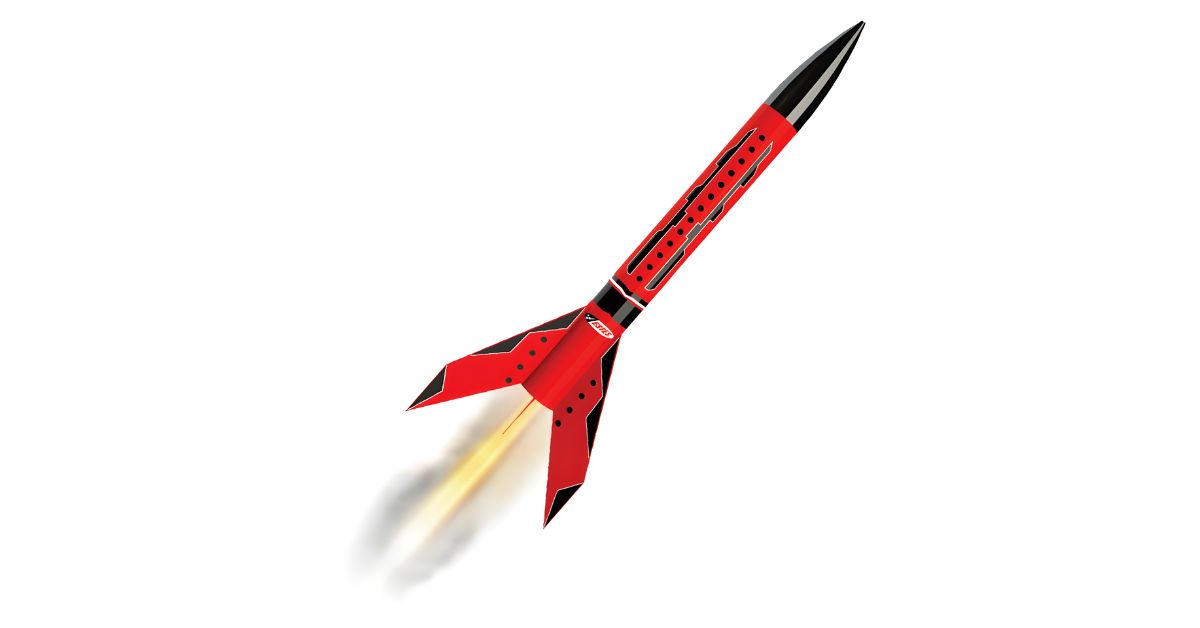
Fin Design Tips for Better Performance
Want to take your rocket to the next level? Keep these tips in mind:
- Sand and seal: Smooth your fins with sandpaper before attaching them. Seal balsa wood with a thin coat of sanding sealer or thinned wood glue to prevent warping and improve paint adhesion.
- Round the leading and trailing edges: Slightly rounding the front and back edges of your fins reduces drag and improves flight efficiency.
- Keep it symmetrical: Make sure all fins are the same size and shape. Asymmetry can cause instability.
- Test stability: Before launching, check that your rocket's center of pressure is behind its center of gravity. This will help keep it stable during the flight.
- Paint and finish: A smooth paint job isn't just for looks—it reduces drag. Use primer, sand between coats, and apply a glossy topcoat for best results.
Ready To Build?
Rocket fins may seem like a small detail, but they're one of the most important components of a successful launch. With this knowledge of rocket fins, you can build rockets that will fly beautifully every time.
At AC Supply, we have model rocket kits for beginners that can help anyone launch their first rocket. Start with a simple design, follow best practices, and don't be afraid to experiment as you gain experience. The sky's the limit—literally. Happy building!